
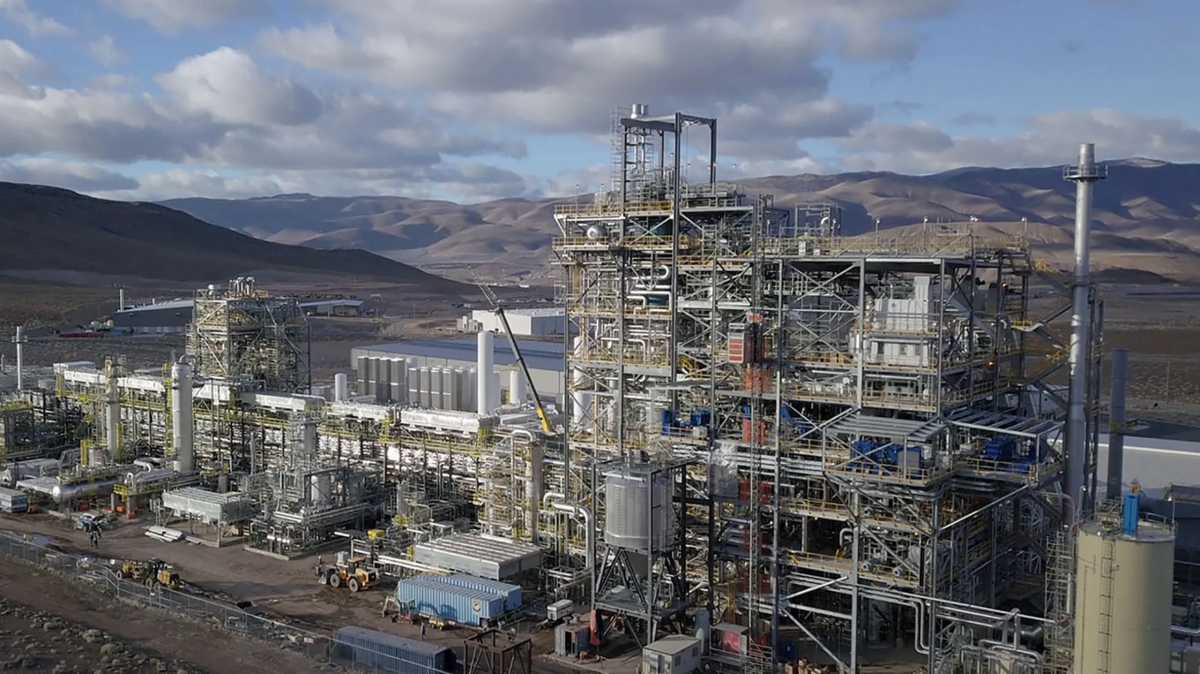
Only a third of a FOAK plant is the technology. Where does the rest of the money go?
This week: John Ellersick and Reina Ashizawa of Next Rung Technology, a team at Greentown Labs that engineers the jump from lab bench to commercial plant.
John built four sustainable technology companies and exited all four. Reina leads the business analytics side, the cost models founders hand to investors.
Let's dive in.
In this week's issue
- John's one-third rule
- Five sewer utilities with deadlines and new money
- Six funders taking applications
Was this email forwarded to you? Subscribe here 👇
FOUNDER LESSON OF THE WEEK
John's one-third rule
John says the core technology is only 30 to 35% of any complete plant. The rest is everything around it: water, wastewater, steam, air, roads, buildings, fire loops, natural gas lines.
Founders and their science teams spend nearly all their time on the core. The other two-thirds is where a lot of the money goes.
His example is a Louisiana plant he helped build. Fermentation was maybe 20% of it. Downstream processing, another 20%. Then 43 process units to commission and a $7 million wastewater treatment plant. "We literally built roads, we brought natural gas pipeline, we brought power."
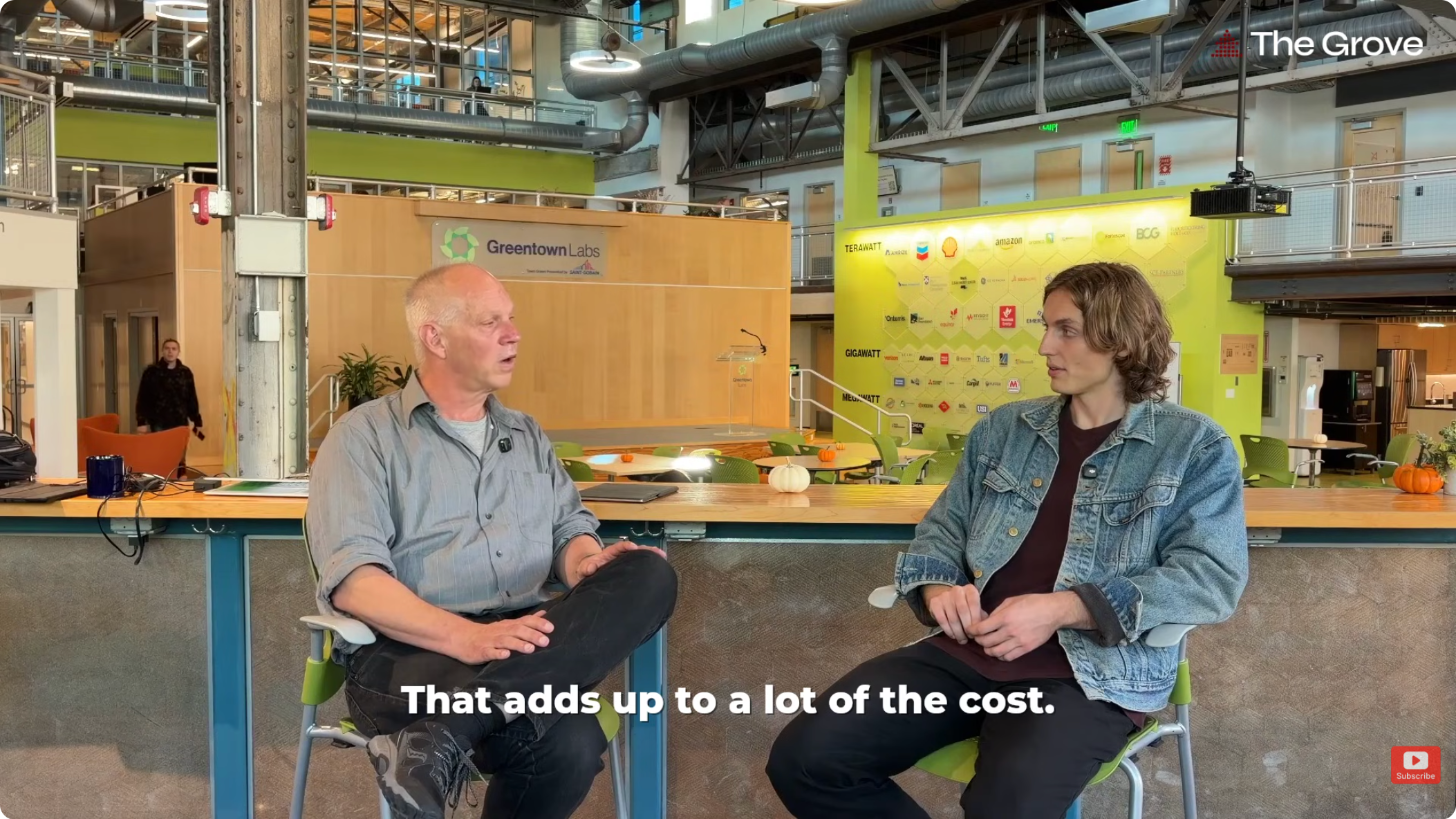
Two things follow. The plant will cost more than you think. And co-location starts to make a lot of sense: build next to a plant that already runs steam, water and wastewater, and you skip much of that two-thirds.
"The one they forgot is to go visit the local wastewater treatment plant the first day they're in town. I'm serious, nobody thinks about that."
John Ellersick, Next Rung Technology
Reina sees the same blind spot from the spreadsheet. Founders usually come to her because an investor asked for a TEA (techno-economic analysis: what your product costs at scale), and they want it to say "two bucks a kilogram."
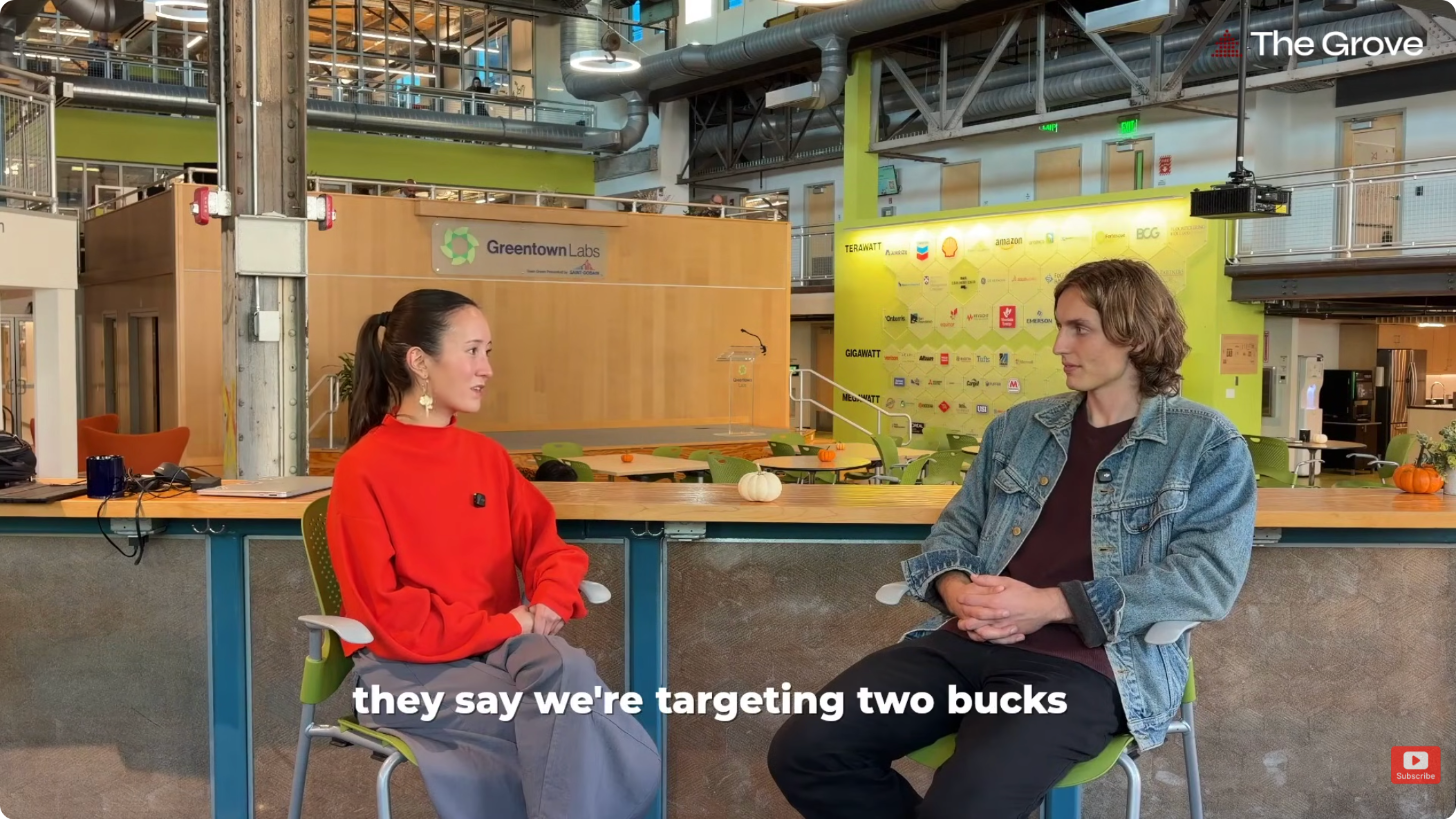
She pushes back. The value is in finding the major cost drivers, because "a lot of the time people will be focusing on things that will only marginally move cost."
Before you scale the core, price the other two-thirds.
I'd never once thought about the local wastewater plant. I will now.


BUYER SPOTLIGHT
Five sewer utilities with deadlines and new money
John says to visit the local wastewater plant on day one. These five are worth the trip.
- ALCOSAN (Pittsburgh): announced Oct. 22 rate increases of 14%, 14% and 13.5% for 2027 to 2029, funding its Clean Water Plan under a federal consent decree. Our pitch: overflow gallons removed per dollar.
- DC Water: a proposed 10-year, $9.69B capital program, with $1.1B to finish Clean Rivers and $2.0B to rehab major interceptors. Our pitch: condition assessment and monitoring for the interceptor work.
- HRSD (Hampton Roads, Va.): must meet 2032 James River phosphorus limits. Design of its ~$324M tertiary facility is paused while it tests alternative treatment technologies. Our pitch: get into that evaluation now.
- Baltimore DPW: says it needs $674M more to meet its sewer consent decree, and proposes 2046 instead of the 2030 deadline. Our pitch: flow monitoring that proves where overflows happen.
- WSSC Water (Md.): a $770.3M FY27 capital budget, a 5% average rate increase from July 1, and $320.4M for aging pipes, pumps and plants.
Sources: each utility's own filings and releases.
FUNDING OPPORTUNITY
Six funders taking applications
Five deadlines between now and January 15, two of them in the Mid-Atlantic, plus a fund that just closed with energy in its thesis.
- SET Award 2027 (€10,000, equity-free) backs energy and climate startups past proof of concept, industry included; applications close November 30.
- RISE PA (Small Award Track, $40M) gives grants to small and mid-sized Pennsylvania manufacturers that cut industrial emissions; Round 5 closes December 15.
- DOE SBIR/STTR Phase I (up to $300K, about 160 awards) funds small businesses across DOE technology areas; pitches due December 16.
- Keeling Curve Prize ($50,000 to each of 10 winners) backs climate projects already cutting emissions; closes January 15 or at 500 applications.
- TEDCO Maryland Innovation Initiative (up to $300K for company formation) backs Maryland startups licensing tech from five state universities; next deadline January 15.
- Bison Ventures ($160M, Fund 2) backs pre-seed to Series B founders in energy, physical AI and health with $1M to $15M checks.
BRANCHES
- The wins and weak spots in America’s solar supply chain (2 min)
- Exelon eyes $8B in energy storage, in part to address PJM supply crunch (3 min)
- Dominion sees $137M net income boost from rate increase (3 min)
- PSEG Power plans 200-MW nuclear uprate as company eyes data center deals (3 min)
- The US power market’s forecasting problem comes at a cost to ratepayers (4 min)
- Virtual power plants can help avoid overbuilt grid if AI boom goes bust (4 min)
- PJM’s revised data center backstop procurement plan reduces utility risks: ICF (4 min)
- Why GridPoint is getting back into batteries (4 min)
CLOSER
Thank you to John and Reina, and to Greentown Labs for the room.
Know someone on your team who owns this problem? Forward it to them.
Feedback
Have any thoughts about what you'd like to see? Let's build together
Podcast Guests
Would you or anyone you know like to be a guest on The Grove? Reply to this email to get the conversation started.
With love, Blake
See you next week!
Member discussion: