

Heard Around The Grove
By Blake Newcomer • February 22, 2026
If 4 million dollars was falling out of the sky, wouldn't you try to catch it?
This is a question Nathan Silvernail remembers Elon Musk asking when he was working at SpaceX. Simply: A "payload fairing" only serves to get the rocket to a certain altitude. After that, it detaches and falls to earth. Conventionally, you just let it land, break, and dispose of it. Catching + reusing it is seems like an obvious question to ask, but it's so hard and expensive the industry typically never did.
The question represents First Principles Thinking: breaking something hard down into pieces that are very simple. From there, we can work towards making decisions that arrive at a compelling solution (or at least an attempt at a solution).
Our 3 highlighted episodes this week: Aukrit Unahalekhaka, Nathan Silvernail, and Eric Fischgrund all apply this in their own way.
In this week's issue
- Biochar in Thailand & Beyond
- Reinventing Wood
- Why Precision > Reach
Was this email forwarded to you? Subscribe here!
Biochar in Thailand & Beyond
There is a version of the carbon credit market that favors developing nations, and Aukrit Unahalekhaka is one of the few people actively building toward it. After seven years running Ricult, an AI-driven AgTech company serving nearly a million smallholder farmers across Thailand and South Asia, Aukrit stepped back and started Alpi Capital, a nature-based climate fund in Thailand that is part investor and part venture builder.
Farming, Finance & Biochar with Aukrit Unahalekhaka, Co-Founder & CEO @ Ricult
His biochar thesis is straightforward:
- Biochar comes from agricultural waste
- Developing nations have a structural advantage in biochar production because they have dense farming populations generating massive volumes of agricultural waste that currently have no economic value.
- Aukrit's model places small, decentralized biochar machines at the village level, farmers bring their waste in exchange for income, the machine converts it to biochar, and the resulting carbon credits get sold to offset buyers while a portion of the physical biochar goes back to farmers to improve their soil yield.
As Aukrit put it, the poorer the country and the more agricultural waste available. In other words, the competitive advantage runs directly counter to how most climate capital gets deployed.
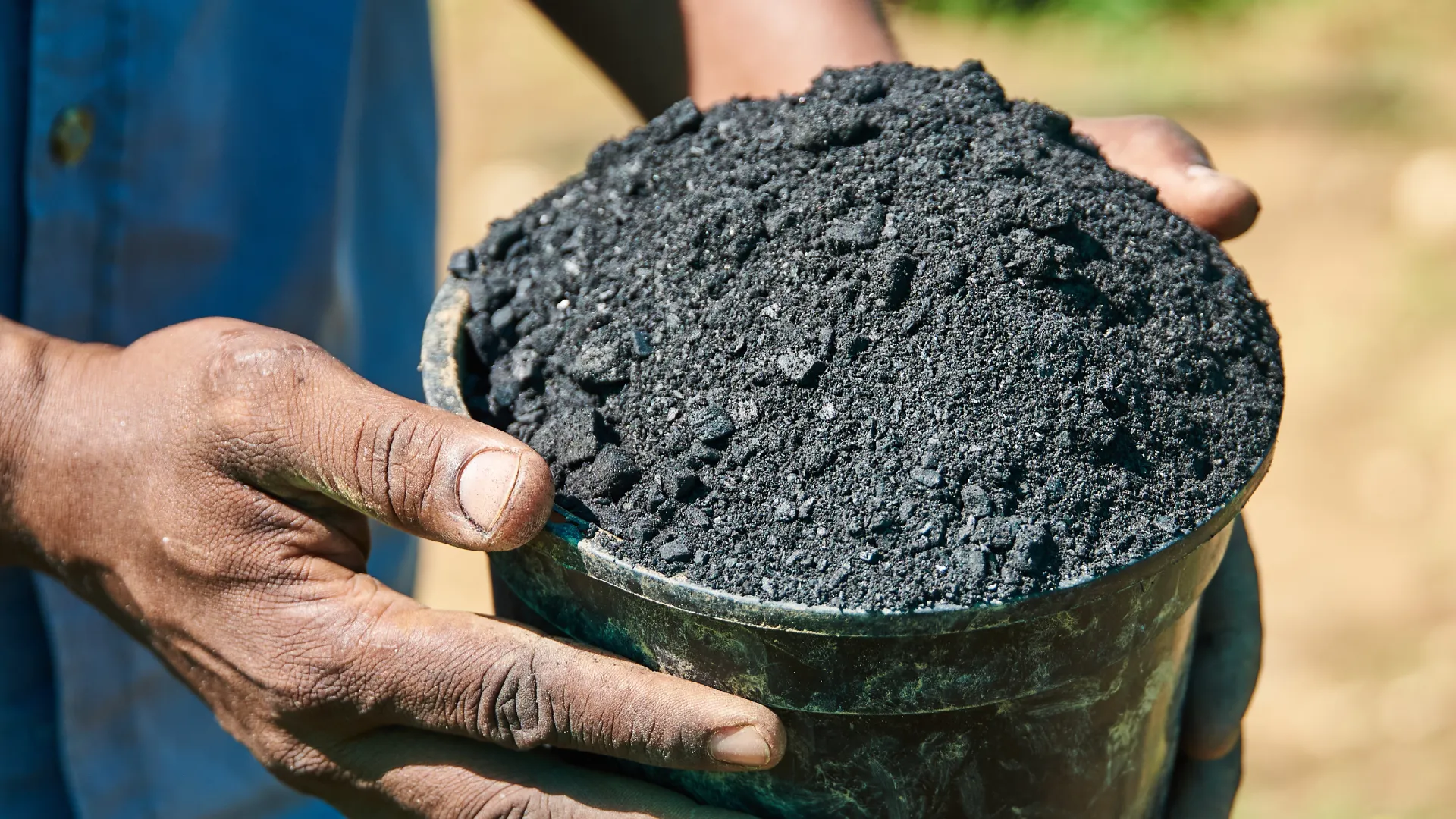
The carbon economics matter here too. Biochar carbon credits currently trade at $130 to $150 per ton, compared to $500 to $700 per ton for more capital-intensive removal technologies like carbon capture and storage. That price gap is what makes biochar accessible as a market entry point for emerging economies.
It's also what makes it controversial. Critics argue cheap biochar supply could slow investment in more durable removal technologies. Aukrit's counterargument is that the two need to coexist, and that countries like Thailand should compete where they have genuine advantage rather than chase technologies that developed nations will always be better positioned to scale.
Most compelling is that this is a financial model built around the actual asset base of rural agricultural communities. Farmers earn more, the soil improves, and the carbon credit revenue creates a self-sustaining loop. The biggest hurdle Aukrit identifies is liquidity in the voluntary carbon market, which remains slower to develop in Asia than he expected.
In the end the question was: Wow, so much waste in Ag production & the country's people need wealth. Why not work with the realities of our economy instead of against it?
Reinventing Wood
Nathan Silvernail did not set out to reinvent wood, but once the research was done it was clear this industry needed evolution.
The insight that launched Plantd Materials came from talking to people on actual home building sites and realizing that the lumber industry's foundational assumptions had never been seriously questioned. Trees take decades to grow, traditional OSB mills cost $400 million, require six months just to turn on, and are sourced from a supply chain that has no flexibility.

The material Planted developed is a carbon-negative engineered wood panel made from fast-growing biomass rather than trees. Getting there took three years of experimentation, including a detour through mycelium furniture that did not scale, before landing on a biomass that passed structural tests, processed efficiently, and could be produced at commercially viable margins.
The production machine they built to make it fits in a 150,000 square foot warehouse, can be reconfigured in an hour, and turns on and off in 30 minutes.
The DR Horton relationship is the clearest signal that the market has validated the approach. Demand from DR Horton and other customers now exceeds what Planted can produce for the next decade at their current trajectory, which makes the agricultural footprint expansion (from 350 acres currently to a target of 10,000 this year) the central operational challenge. What a good problem to have.
Building Sustainably with Nathan Silvernail, CEO @ Plantd
What Nathan brings to this conversation about first principles is specificity. He is talking about the exact direction the belts run on his production machine, why that differs from industry standard, and what it produces in terms of margin and scalability. The lesson I take from his episode is that first-principles thinking is only useful if it is applied all the way down; to the equipment, the supply chain, and the agricultural model underneath it.
Why Precision > Reach
Eric Fischgrund started Fischtank PR in 2013 as a freelance practice with three clients and no business plan beyond keeping the lights on. Twelve years later, Fischtank has 26 employees and a client roster that has generated placements in the Wall Street Journal, Bloomberg TV, Fox News, TechCrunch, and Axios.
The throughline from then to now is a single deliberate bet: while the rest of the PR industry moved toward automation, mail merge platforms, and AI-assisted pitching, Eric kept picking up the phone and building real relationships with individual journalists. That decision looks obvious in retrospect, but it was not obvious when he made it.
Telling Climate with Eric Fischgrund, Founder & CEO @ Fischtank PR
The case study that best captures his philosophy involves a client from Fischtank's first year, an atmospheric water generation company that on the same day received coverage in USA Today's business section and a trade publication called Rig Zone.
The USA Today piece generated no meaningful market response. The Rig Zone piece resulted in two Fortune 100 companies calling the client directly. The audience that looks impressive on a media list is rarely the audience that moves your business.

This is especially important in the current policy environment, which has created real headwinds for Fischtank's clients. Capital has dried up in parts of the clean tech market, and some companies have had to scale back their communications budgets as a result.
Feedback
Have any thoughts about what you'd like to see? Let's build together
Roundtables
Curated, pitch-free roundtables that spark real collaboration between and your prospects. GTM solution for long and complex sales cycles.
Cohort-based event series
Small groups (10-15 people) + industry expert speakers + 4-5 targeted sessions = accelerated career development. Want to participate or present? Reply to this email.
Podcast Guests
Would you or anyone you know like to be a guest on The Grove? Reply to this email to get the conversation started.
With love, Blake
See you next week!
Member discussion: