

Happy Monday everybody. Two beautifully complimentary conversations this week.
One with Sachin Nair, who quit his job a year ago to start Hydron. They’re a desalination company in the semi finals for the global XPrize for water scarcity.
The other was with Sergio Carvalho, who invests at Planet First Partners. We zoom way out in order to get at successful GTM.
Let's dive in.
Was this email forwarded to you? Subscribe here!
In this week's issue
- Make the Sheets Balance
- Know What You're Selling Into
- Hardtech Returns
Make the Sheets Balance
Sachin: when you drill for oil, you get four to five times more water than oil, and that water is dangerously salty.
In Texas alone that's around twenty million barrels a day; enough to supply New York City for eight months. You can't inject it underground without setting off earthquakes + you can't store that kind of volume above ground. It usually just sits there as a very expensive problem.
For decades, there were two options:
- You can boil the water off. This eats a staggering amount of energy and leaves salt deposits everywhere.
- Push it through membranes. This works beautifully right up until the water gets salty enough to foul the membranes and stop the whole system.
Hydron is betting on a third approach with no filter and no heating surfaces at all.
The underlying science behind their approach has been sitting in academic literature for decades. The breakthrough was figuring out how to make the economics work.
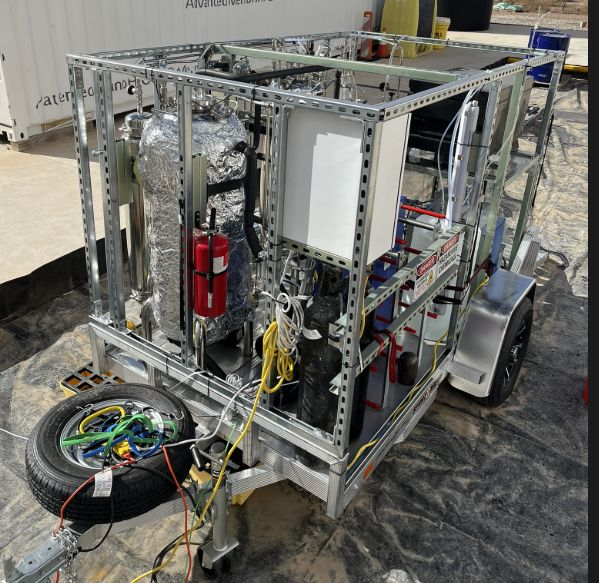
Once proven, all they have to do is approach these industry players with hard numbers about how much waste they can process and deals move quickly from there.
As discussed in the episode, Sachin is in an interesting place where the conversations with prospects go very smoothly. There is deep understanding between Hydron and these industry players about the cost of dealing with this produced water and thte potential savings of this approach desalination.
Only hurdle now is scale.
LESSON: Understand deeply your customers’ balance sheet. Where do you fit it? Conversations become more direct.
Know What You're Selling Into
Sergio came up as a biologist, spent fifteen years inside Brazil's Ministry of the Environment, and only later crossed into investing. He sees the energy transition through a birds-eye market-building lens.
If you’re a founder, Sergio says you too often underestimate the system they're trying to change. (isn’t that delusion part of the whole point, though?)
You look at the urgency of climate change and think, "Why isn't this moving faster?"

Climatech deals with infrastructure that was built over decades, owned by powerful incumbents, and deeply woven into the economy. These systems move very slowly.
For example, Sergio mentioned a case from the UK with a start up pushing heat pumps. An industry group representing incumbent gas pipeline operators ran a smear campaign against the tech and gained traction.
The incumbent pressure is navigable. The lack of preparation for such a market pressure is not.
The point is less about technology and more about *deeply* understanding the system you're entering. Be conscious about how change actually happens in the part of society you seek to disrupt and how much power incumbents wield.
Hardtech Returns
This is a favorite point of mine in the episode: Climate tech can be a great investment, but a lot of companies spend years being valued like tech businesses before reality shows up.
You raise on the hype of a tech company. At some point you evolve a tech-plus-project company that requires heavy capex, infrastructure capital, and physical things built in the real world.

The returns are still real, they're just not the returns your early investors thought they were buying.
This isn’t a problem as long as everyone is honest about it from the beginning. So many investors aren’t!
Coming from Brazil, where the cost of capital has always been brutal, that kind of math is normal to him.
For founders: being realistic about what kind of company you're building from the beginning can help you create the capital stack you need later down the line.
Resources
- How much water is produced by fracking per day? See the text in the blue box here
- Evolution of the climate capital stack. A bit dated but still good
Feedback
Have any thoughts about what you'd like to see? Let's build together
Podcast Guests
Would you or anyone you know like to be a guest on The Grove? Reply to this email to get the conversation started.
With love, Blake
See you next week!
Member discussion: