

Heard Around The Grove
Blake Newcomer • May 18, 2026
The U.S. is adding 24 GW of new battery storage this year – nearly double last year's record. Who is deploying it?
Alex Shoer spent nine years building renewable energy businesses in China before launching Gridvest, a battery storage distribution and financing company focused on the commercial and industrial middle market.
The U.S. grid is aging, overloaded, and about to get slammed by AI data centers. Battery storage is the only energy asset you can realistically deploy in under two years. And yet there's a middle market that remains wildly underserved.
This week, we get into what the battery storage middle market actually looks like, why policy whiplash is forcing companies to grow up faster than planned, and what China's solar story can teach us about where U.S. storage is headed.
Let's dive in.
Was this email forwarded to you? Subscribe here.
In this week's issue
- The forgotten middle market
- Policy as accelerant
- Trusting the curve
Was this email forwarded to you? Subscribe here!
THE FORGOTTEN MIDDLE MARKET
This is something I did not know. Most storage activity is on the poles of the deployment spectrum.
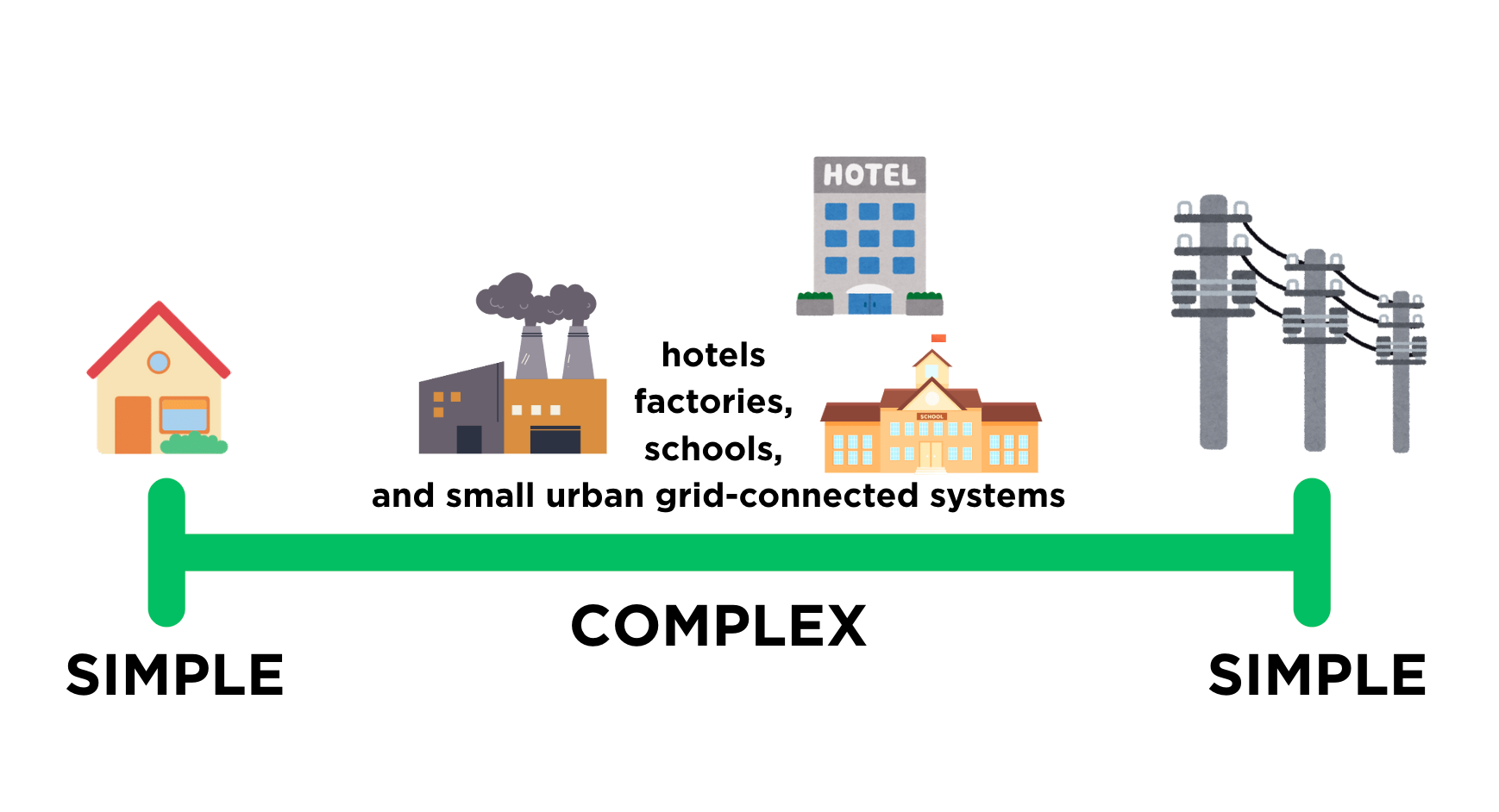
Residential is straightforward. Utility-scale is massive but technically simple – on, off, on, off. The middle is more complicated.
Gridvest distributes battery storage equipment and financing to the installers, construction companies, and developers building commercial and industrial-scale projects. Think hotels, factories, schools, and small urban grid-connected systems.
Why this segment is so hard
When you connect a battery to a commercial building, you're managing the building's energy needs, its connection to the grid, solar generation, backup systems, and data flows all at once.
A commercial project might only be five to ten times the size of a residential one, but a hundred times as hard. Most companies stay away because the economics don't obviously justify the headache.
The developers doing this work essentially run a startup with every single project. Each one requires its own entity, its own financing, its own permitting, its own customer relationship.
I like this because it expands our definition of climatech entrepreneurs. In addition to the FOAK founders, it's the people navigating fire codes and utility rate structures project by project.
The demand signal is already here
On the buyer side, commercial building owners and real estate developers are watching their electricity bills climb 10, 20, sometimes 30 percent a year. They're interested when you tell them batteries can help.
But Alex described a pattern I've seen across clean tech: people are receptive to the idea and hesitant when confronted with upfront costs, technical complexity, and a policy landscape that changes every few months. The education curve is real.
RESOURCES
Battery Storage and Grid Modernization
- "Battery Storage in the United States: An Update on Market Trends" – U.S. Energy Information Administration
- "The Future of Energy Storage" – MIT Energy Initiative
TRUSTING THE CURVE
As a builder in this space, the well you're drinking from right now can dry up fast. Alex has lived this through tariffs, COVID, policy shifts, technology changes. Every year at Gridvest has required a meaningful pivot.
He navigates this by (a) planning for what's next 20 to 30 percent of the time and (b) trusting data over consensus. Alex said that by the time he got involved with solar in China and batteries in the U.S., the trajectory of the market was obvious to him.

To act, you have to believe your own analysis over the skepticism in the room. "[other founders] weren't magic geniuses," he said. "They just trusted what they saw."
In climate tech, the builders look at the data, believe it, and then did the unglamorous work of making it real. With a sprinkle of delusion thrown in to get through the tough times.
Curator's Pick
 Hannah Ritchie and Pablo Rosado
Alex mentioned that battery storage costs are declining even faster than solar did – and solar's cost curve was historically unprecedented. If you haven't seen the latest data on lithium ion price trajectories, it's worth a few minutes.
Feedback
Have any thoughts about what you'd like to see? Let's build together
Roundtables
Curated, pitch-free roundtables that spark real collaboration between and your prospects. GTM solution for long and complex sales cycles.
Cohort-based event series
Small groups (10-15 people) + industry expert speakers + 4-5 targeted sessions = accelerated career development. Want to participate or present? Reply to this email.
Podcast Guests
Would you or anyone you know like to be a guest on The Grove? Reply to this email to get the conversation started.
With love, Blake
See you next week!
Member discussion: