

Heard Around The Grove
Blake Newcomer • May 11, 2026
AI, AI, AI, AI, AI - this content is everywhere. It's for a reason, the technology is being applied in what seems like every industry all of the time.
One place certainly impacted by AI is go to market. You want to do prospective research on your buyers, size your market, find people and their contact information? All this is available to you at volumes and velocities never before seen.
In the end, though, who cares? A popular concept called The Buyers Pyramid states that only 3% of the market you are capable of selling to is ready to buy right now. Everyone else isn't.
This is no different in climatetech ~~ in fact it's an advantage. Unlike other industries, regulatory environments are massive buying signals and all of that information is publicly available.
How do we systemically embed this into our growth strategy? That's Eben's question to answer.
Oh, and what would The Grove be without a focus on the mental side of entrepreneurship?
Let's dive in.
In this week's issue
- Regulatory Signals are Buying Signals
- Scaling Hardware Through Resistance
- Climatetech Survival is 90% Mental (or something like that)
Was this email forwarded to you? Subscribe here!
Regulatory Signals are Buying Signals
According to the 2026 Global Cleantech 100 Trend Watch from Cleantech Group, climate adaptation and resilience remains consistently under-recognized even as multiplying weather events create increasing urgency. The companies closing that gap are the ones treating public regulatory data as a precision targeting tool.
SaaS companies traditionally rely on intent data like website visits, content downloads, and hiring patterns that can be fuzzy proxies for buyer readiness. At least something is going our way in this industry.
How to Utilize this in Product, Sales, and Marketing
The most important takeaway from this conversation is the order of operations. Before you optimize your campaigns for buying signals, ask three questions. Ordered by importance:
Product: Has the product been validated as a competitive solution in the specific segment you are targeting?
If you are competing in a crowded category like carbon accounting, general-purpose positioning will lose to funded incumbents every time. Think about and find an underserved sub-segment where your product development can satisfy a problem that the big players overlook. Use this to build case studies and transition into bigger markets later.
Sales: Are the objections your sales team encounters product development cues or communication failures?
Every objection in early sales conversations is the market building your requirements document. If prospects repeatedly misunderstand your value proposition, that is signal.
Marketing: What repeated misunderstandings from sales conversations should marketing be pre-educating the market about?
Eben shared the example of California's SB 253 climate disclosure law, where sustainability teams frequently misread their own compliance requirements. Marketing's job becomes eliminating that objection before it ever reaches the sales team.
If your positioning is not stable, all messaging changes are built on an unstable foundation.
If messaging is not stable, all the Signal-informed distribution you invest in is wasted too.
Work backward to the root before scaling forward.
Resources
Climate Tech Growth and Go-to-Market
- Eben SERIES Episode 1: Why Customer Acquisition Cost Is Structurally Higher in Climate Tech
- 2026 Global Cleantech 100 Trend Watch -- Cleantech Group
- 15 Climate Tech Startups to Watch in 2026 -- Trellis
Scaling Hardware Innovation When the Market Fights Back
Sounds easy: build better hardware, demonstrate the results, and customers will come.
In climate tech, the reality is almost exactly the opposite. The incumbents have deeper pockets and buyers default to what they know. "Innovative"="unproven."
I have spoken to enough founders at this point to know this this is the norm.
Speaking with Michael Fakukakis this week crystallized how long that fight can take and what it actually looks like to win it without outside capital.
How to Navigate Market Perception as a Hardware Startup
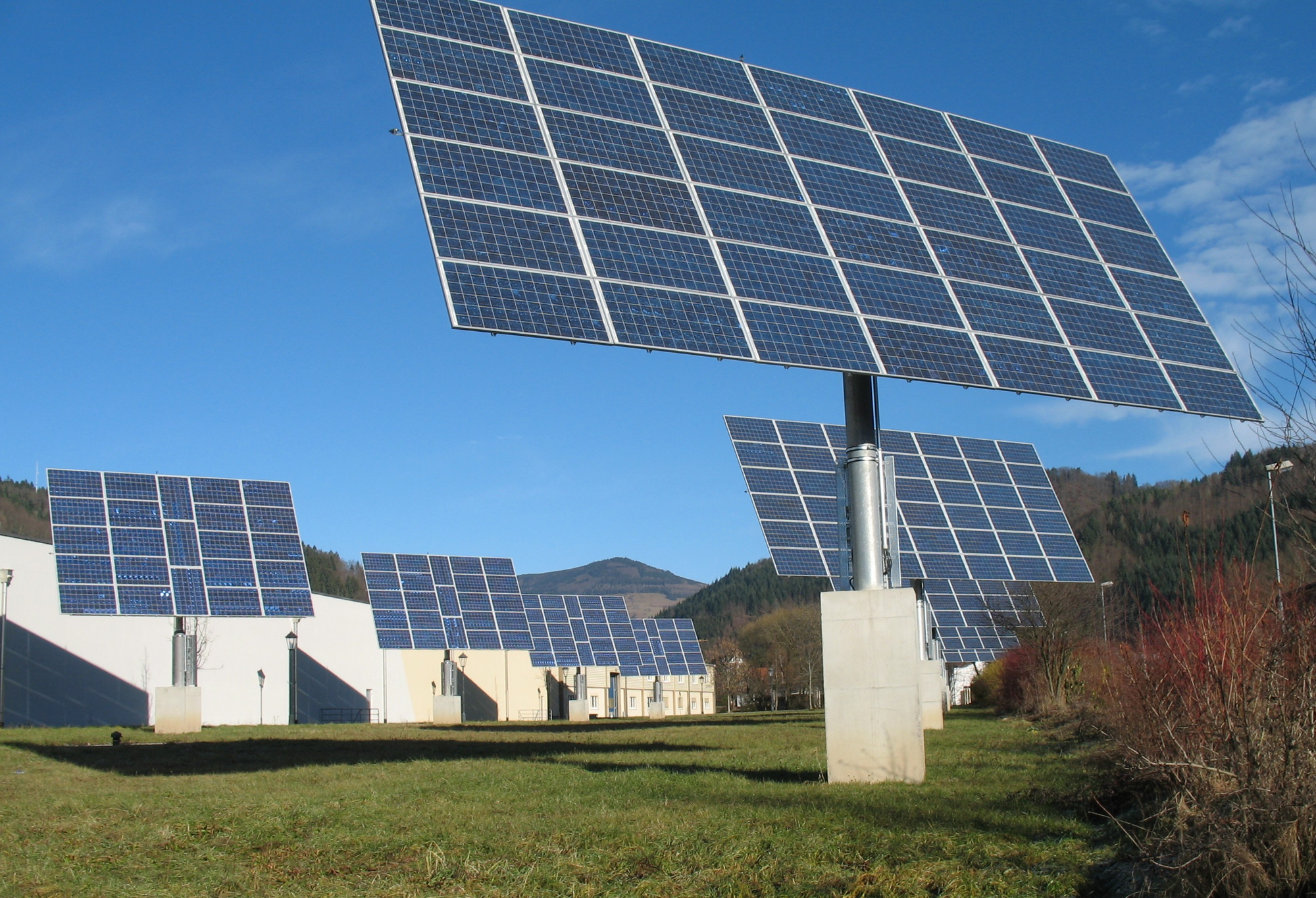
Michael's experience contains a playbook that applies well beyond solar trackers and Mechatron. His dual-axis technology was dismissed because other dual-axis companies had failed before him.
He is fighting a category perception problem.
The solution was not to argue with the market. It was to find the segments where the technology advantage was undeniable like farms, commercial buildings, and parking lots. With this, they built an installation track record that eventually made the utility-scale argument for itself.
That patience, combined with the discipline to grow profitably without investors, is what kept Mechatron alive through cycles of political and policy uncertainty in renewables.
This parallels Eben's framework: Michael effectively ran the product-sales-marketing sequence by proving the product in accessible segments before attempting the enterprise sale.
Climatetech Survival is 90% Mental (or something like that)
Raise your hand if
- You spent 18 months discovering that your addressable market is too small
- Your deals consistently die at the proposal stage and you keep trying to fix it
- You have no idea really what the solution to success is but you're determined to figure it out
These are not hypothetical scenarios. They are the exact situations described in both conversations this week, and they represent the kind of thing that ends climate tech companies.
The Mindsets That Make the Difference
Eben and Michael come at founder resilience from completely different angles; landing in the same place.
Eben frames it as intellectual humility applied to growth. He described working with a company that was convinced financial forecasting was the most attractive value proposition for their energy management platform. They tested it. The market did not respond.
What actually caused people to start a demo was something far simpler: time savings for overworked buyers. His takeaway: "Test and learn and be willing to be wrong – as many times as you need to be."
The founders he finds most inspiring are the ones who can ship an idea, watch it fail, and immediately ask the tough questions about why without letting ego slow them down. As he put it, the best operators are usually the most humble ones.
Michael frames it as raw self-determination rooted in identity. When asked what kept him going through two and a half years with no customers, no network, and constant pushback: "It's a personal issue to me to be successful. I never give up."
He was equally clear that entrepreneurship is not for everyone "it takes certain type of people and personalities and egos and self-determination" to do it.
Family support, belief in the product, and a deep conviction that the company has not yet reached the level of success it deserves are also what fuel the daily push. Sixteen years in, he still calls Mechatron his baby.
Feedback
Have any thoughts about what you'd like to see? Let's build together
Roundtables
Curated, pitch-free roundtables that spark real collaboration between and your prospects. GTM solution for long and complex sales cycles.
Cohort-based event series
Small groups (10-15 people) + industry expert speakers + 4-5 targeted sessions = accelerated career development. Want to participate or present? Reply to this email.
Podcast Guests
Would you or anyone you know like to be a guest on The Grove? Reply to this email to get the conversation started.
With love, Blake
See you next week!
Member discussion: