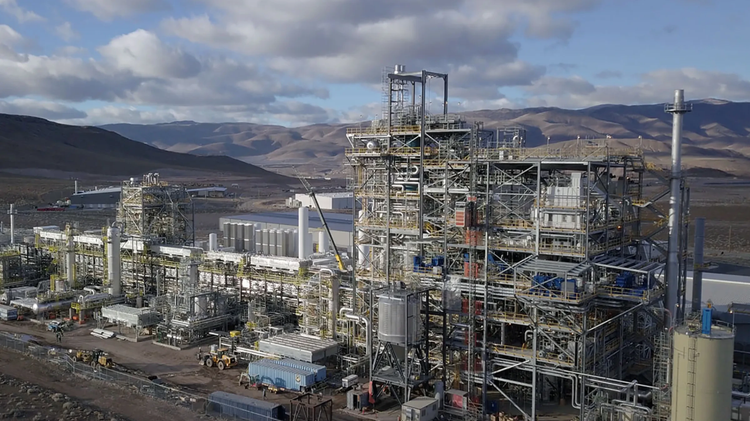
The Waterfront Is Moving Inland

New York City is built on marshland and buried creeks. So where does the waterfront stop?
This week: Furhana Husani, VP of Programs and Strategy at Waterfront Alliance, a coalition of 1,100 partners working on the New York and New Jersey waterfront.
Let's dive in.
In this week's issue
- At the water's edge, the room decides
- Four NY-NJ buyers paying for floodwater now
- Six funders open for applications
Was this email forwarded to you? Subscribe here 👇
FOUNDER LESSON OF THE WEEK
At the water's edge, the room decides
Ask Waterfront Alliance where the water's edge stops and you start a debate. Furhana says they have it all the time.
New York was built over wetlands, marshes and creeks. Storm water flooding keeps pushing the problem inland.
"Water wants to go where it's always been."
Furhana Husani, Waterfront Alliance
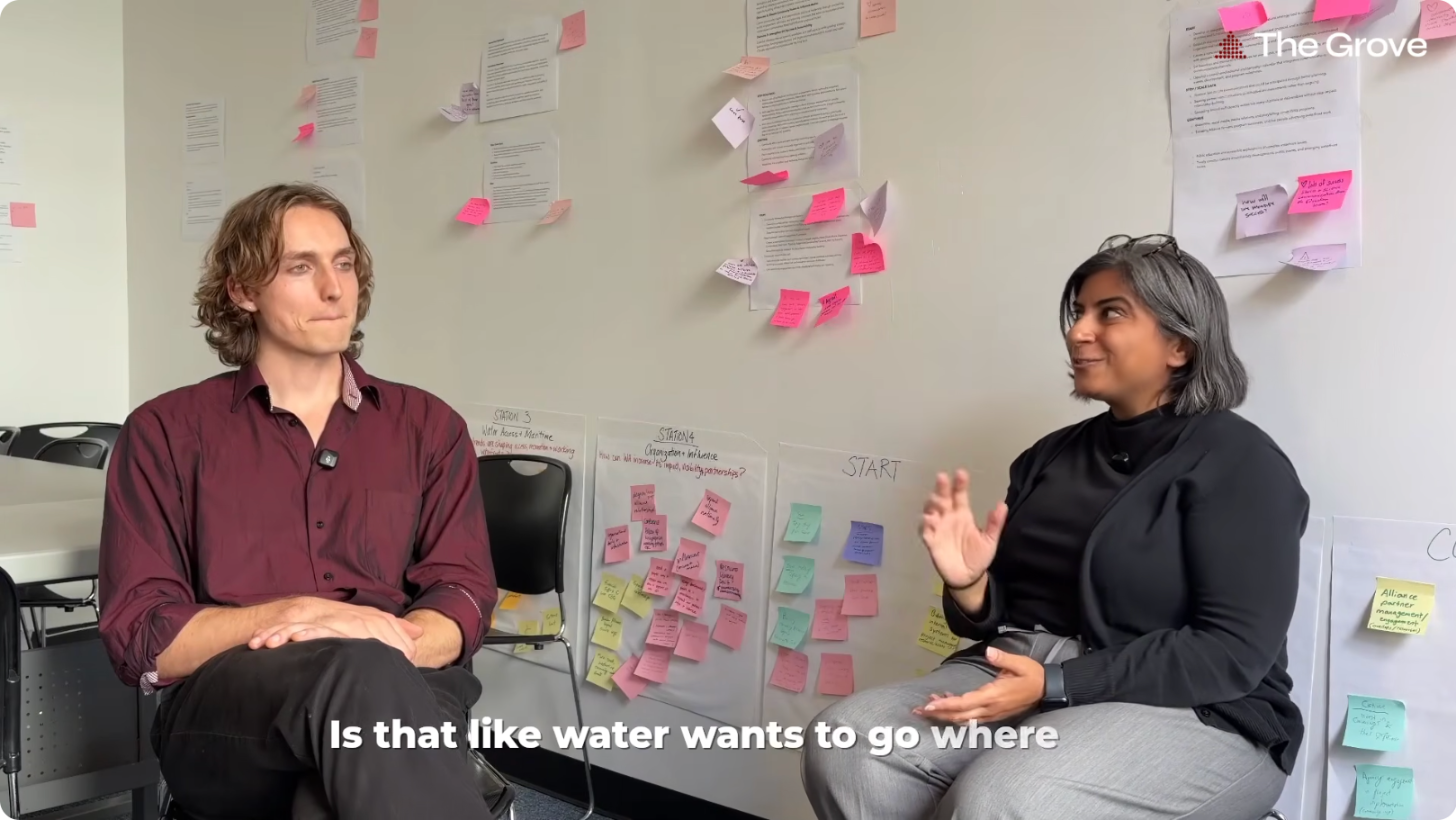
In Flushing Meadows Corona Park, a creek runs partly underground through pipes. The alliance has funding and a conceptual design to bring it back above ground and strengthen its link to the bay.
For a founder with flood or heat technology, a moving waterfront is a bigger market. It is also a more crowded sale.
Furhana names consensus as one of her two biggest hurdles: "It is so hard to find consensus on what should be built along the water's edge." The other is money. Mitigation gets the funding; resilience and adaptation get far less.
What the alliance offers a startup is reach. Its May conference draws 800 to 900 people from city and state agencies, community groups and engineering firms, with a Blue Tech Expo on the floor. Its WaterWire blog reaches 17,000 subscribers.
In flood resilience, win the room before you chase the buyer.


ALSO IN THE GROVE THIS WEEK
DC Palter, Chemical Angels on venture math.
At seed, nine of ten investments fail, so the winner needs roughly a 50x return after dilution. A $20 million business is a great business and a bad venture bet.
"If you're raising a million dollars on a 10 million valuation, you need to show me how you're going to get to a 500 million dollar exit."

Listen: What Investors Look for in Startups (38 min)
BUYER SPOTLIGHT
Four NY-NJ buyers paying for floodwater now
- NYC DEP: a $95M Cloudburst project in Homecrest, Brooklyn (announced Apr. 30), sized for 2+ inches of rain an hour, plus $108M to replace 6,700+ outdated catch basins. Our pitch: data on which sites cut street flooding most.
- MTA (NYC): $700M in its 2025-29 capital plan to protect the subway from heavy rain. An August state audit found two of four flood projects it reviewed late and over budget. Our pitch: monitoring that shows where water gets in.
- Port Authority of NY & NJ: its approved 2026-35 plan has $48.7M for floodgates at 17 JFK outfalls and $25M for Van Wyck storm pumps, both still in design or planning. Our pitch: get specified now.
- Jersey City MUA (N.J.): under a federal sewer consent decree, it hired an emergency contractor June 23 for failing pumps, and plans to replace a sewer section for an NJDEP flood wall. Our pitch: pump condition monitoring.
Sources: each buyer's own releases, plans and filings, plus a NY State Comptroller audit.
FUNDING OPPORTUNITY
Six funders open for applications
New this week: a UK water-resilience grant, a relaunched federal seed fund, and a $135M physical-industries fund.
- DOE SBIR/STTR Phase I (up to $300K, about 160 awards) funds small-business energy innovators across DOE technology areas; pitches due December 16.
- Keeling Curve Prize ($50,000 to each of 10 winners) backs climate solutions that aim to bend the Keeling Curve downward; closes January 15 or at 500 applications.
- Ofwat Agri-Water Cross-Sector Challenge (£200K to £2M per entry) funds UK-incorporated innovators restoring water systems while keeping farming resilient; entries close February 8.
- NSF America's Seed Fund (up to $2M, zero equity) posted its relaunched SBIR/STTR solicitation November 12, open to nearly all technology areas, energy included; pitches accepted anytime.
- Zacua Ventures ($135M, Fund II) backs early-stage physical-industry founders, from grid and storage to water infrastructure; closed November 10, and its site takes decks.
- AP Ventures ($300M, Fund III) backs Seed and Series A industrial and energy tech founders, from hydrogen to advanced recycling; closed October 28.
BRANCHES
- PJM Accepts Fourth Expedited Interconnection Track Project (2 min)
- Utility, tech officials see opportunities to increase grid utilization (3 min)
- Constellation pursues hybrid capacity contracts alongside nuclear uprates (3 min)
- Expansion proposal for Brooklyn plants fuels data center fears (3 min)
- Opinion: Keep New York Storm Batteries Ready (4 min)
- ConEd joins utilities seeking to loosen New York restrictions on owning generation (5 min)
- Bedrock Energy Raises $24 Million to Mainstream Small-Scale Geothermal (5 min)
- What the midterms mean for data center developers in PJM (5 min)
CLOSER
Thank you to Furhana, and to Waterfront Alliance for hosting two Grove recordings for free. DC, I'm holding you to the episode from Japan.
Know someone on your team who owns this problem? Forward it to them.
Feedback
Have any thoughts about what you'd like to see? Let's build together
Podcast Guests
Would you or anyone you know like to be a guest on The Grove? Reply to this email to get the conversation started.
With love, Blake
See you next week!
Free, every Monday
Get the next issue in your inbox